The Evolution of the Web
The internet has come a long way from the static pages of Web1 and the social-media-driven Web2. Today, in 2026, we are witnessing the full-scale integration of web3. Unlike its predecessors, Web3 is built on the principles of decentralization, transparency, and user ownership. No longer are users just product of big tech companies; they are now stakeholders in the digital ecosystems they inhabit.
Ownership Through Tokenization
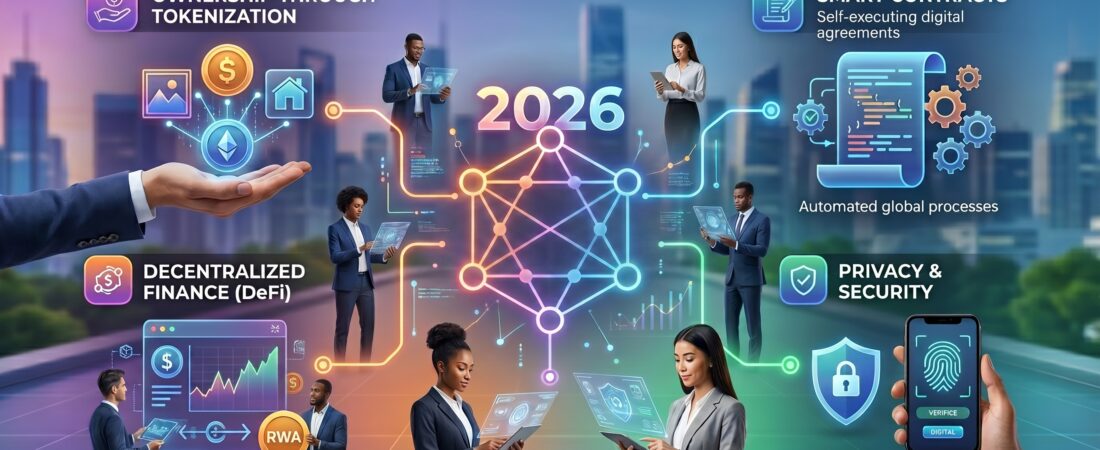
The core of Web3 is the ability to own digital assets. Whether it is your social media data, digital art, or even virtual real estate, blockchain technology ensures that your ownership is verified This has birthed the “Ownership Economy,” where creators can monetize their work directly with their audience without needing a man.
The Role of Smart Contracts
What makes Web3 truly revolutionary in 2026 is the maturity of Smart Contracts. These are self-executing contracts with the terms of the agreement directly written into lines of code. They have automated everything from insurance claims to global supply chains, making processes faster, cheaper, and more secure than traditional legal frameworks.
Decentralized Finance Reaches Maturity
Finance was the first sector to be disrupted, and today, DeFi is a robust alternative to traditional banking. With high-speed blockchains like Solana and advanced Layer 2 solutions, users can now lend, borrow, and trade assets globally in seconds. The focus in 2026 has shifted towards Real World Assets where physical assets like gold and real estate are tokenized and traded on the blockchain.
Privacy and Security in a Decentralized World
In an era of frequent data breaches Self-Sovereign Identity Users no longer need to share their private information with every website they visit Instead they use encrypted digital wallets to verify their identity keeping their personal data private while still accessing premium digital services.
Conclusion
Web3 is not just about cryptocurrency; it is about a more equitable and secure internet. As we look at the tech landscape of 2026, it is clear that decentralization is the standard, not the exception